
Infrastructure Requirements for Pharmaceutical Distributors in India
Browse 3,500+ WHO-GMP certified PCD pharma companies offering monopoly franchise rights across all 28 states. Compare pricing, products & territory — for free.
Our expert connects you with the best PCD company within 24 hours
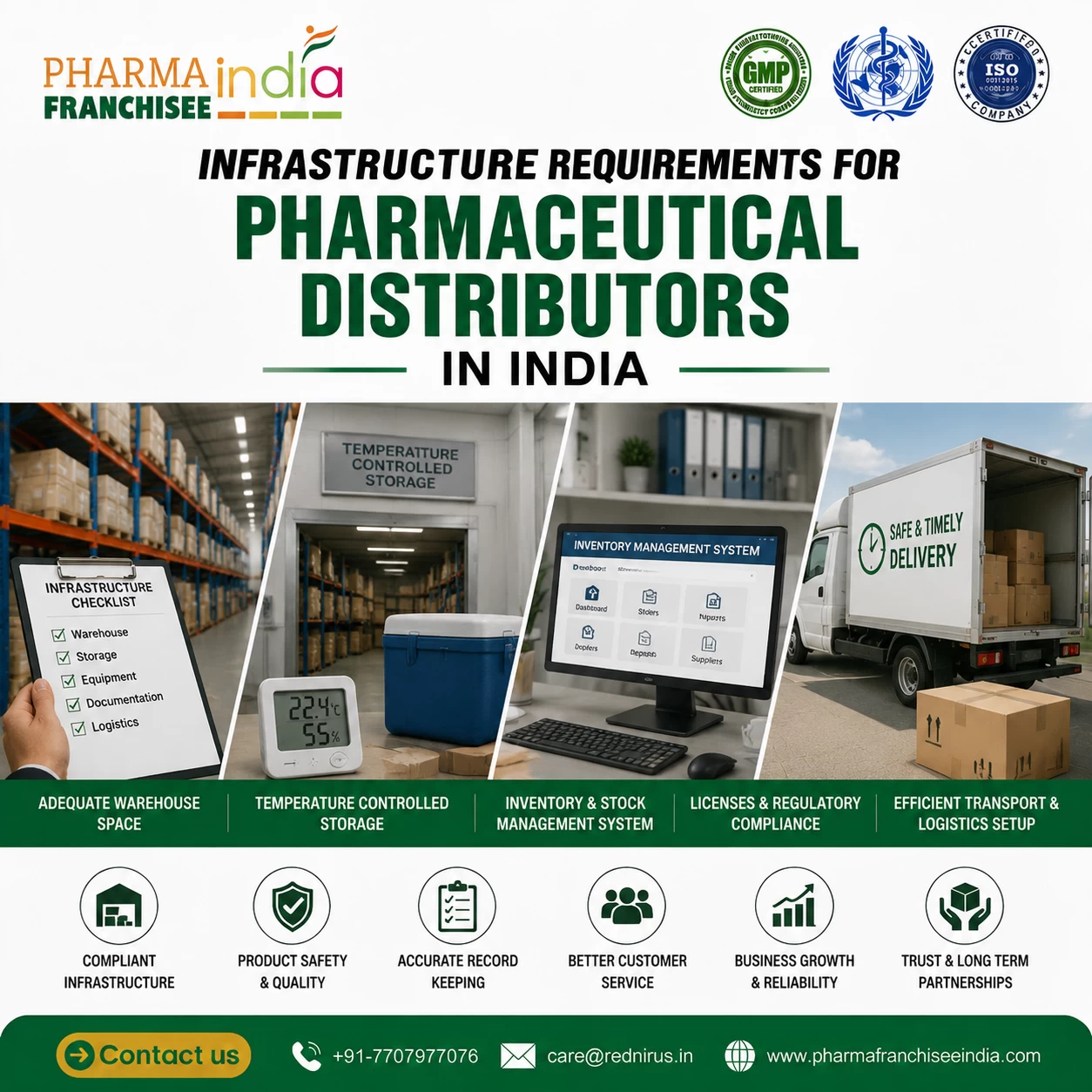
Infrastructure decisions made at distribution business launch create operational foundations either supporting growth or creating persistent problems regardless of how well everything else executes. Pharmaceutical distributors in India who underinvest in infrastructure face regulatory compliance failures, product quality issues, and operational inefficiencies that compound over time.
Getting infrastructure right from the beginning costs more upfront. It saves enormously in avoided regulatory problems, product losses, customer complaints, and operational inefficiencies over the distribution business lifetime.
Pharma distributors evaluating infrastructure requirements often focus exclusively on storage space, missing equally critical elements—temperature control systems, documentation infrastructure, vehicle requirements, technology systems, and safety compliance. Each element affects operational capability and regulatory standing.
We're walking through every infrastructure element pharmaceutical distributors in India need, with specific standards, realistic cost estimates, and compliance requirements for each.
Storage Facility Requirements
Storage facility quality directly affects product quality, regulatory compliance, and operational efficiency.
Space Standards and Layout
Minimum storage space for starting medicine distributor operations depends on product range breadth and monthly turnover volumes. Practical minimums:
Small operations handling ₹20-40 lakh monthly turnover: 400-600 square feet dedicated storage. Medium operations handling ₹40-80 lakh monthly: 600-1,000 square feet. Larger operations exceeding ₹80 lakh monthly: 1,000+ square feet with layout optimization.
Space calculations must account for proper product organization—separate areas for different product categories, adequate aisle width for safe movement and inventory management, quarantine areas for damaged or returned products, and administrative space for documentation and order management.
Construction and Surface Standards
Pharmaceutical distribution companies storage areas must meet specific construction standards preventing contamination and enabling proper cleaning.
Flooring should be smooth, non-porous, washable surfaces—epoxy coating over concrete is standard and affordable. Rough concrete creates cleaning difficulties and dust generation problems affecting product quality.
Walls require smooth, washable surfaces. Painted brick or plaster surfaces meeting these standards are acceptable. Wooden walls create pest harborage and moisture absorption problems incompatible with pharmaceutical storage standards.
Ceilings should be smooth, free from exposed pipes or beams collecting dust. Drop ceilings with accessible panels are acceptable when surfaces meet cleanliness standards.
Ventilation and Air Quality
Pharmaceutical products require controlled environmental conditions. Inadequate ventilation creates temperature and humidity problems degrading product quality.
Pharma distributors need:
-
Adequate air circulation preventing hot spots and humidity accumulation
-
Exhaust fans removing warm air during summer months
-
Air conditioning for temperature-sensitive product areas
-
Humidity control in monsoon-prone regions where ambient humidity exceeds pharmaceutical storage requirements
Investment in proper ventilation: ₹50,000-2,00,000 depending on facility size and climate requirements.
Temperature Control Infrastructure
Temperature control failures destroy pharmaceutical product quality and create regulatory violations. This is non-negotiable infrastructure for serious pharmaceutical distributors in India.
Ambient Temperature Control
Most pharmaceutical products require storage below 25-30°C. Indian summers regularly exceed these temperatures across most regions.
Air conditioning entire storage facility is ideal but expensive for large spaces. Practical alternatives include:
Zone cooling—air conditioning high-value and temperature-sensitive product areas while maintaining adequate ambient control in bulk storage areas. Insulated storage rooms within larger facilities for sensitive products. Evaporative cooling for dry climate regions where ambient humidity permits.
Realistic investment: ₹1,50,000-5,00,000 for adequate ambient temperature control depending on facility size and local climate.
Cold Chain Infrastructure
Pharmaceutical distribution companies handling vaccines, biologicals, certain hormonal products, or other cold chain items require refrigerated storage infrastructure.
Pharmaceutical-grade refrigerators maintaining validated 2-8°C range with temperature monitoring capability. Minimum two units providing backup when one requires servicing. Inverter backup power preventing temperature excursions during power outages.
Walk-in cold rooms for operations handling significant cold chain volumes. Initial investment of ₹3,00,000-8,00,000 for walk-in cold storage with proper insulation and monitoring systems.
Temperature Monitoring Systems
Temperature monitoring isn't optional—it's regulatory requirement for pharma franchise and pharmaceutical distribution operations handling temperature-sensitive products.
Continuous electronic temperature loggers recording at 15-30 minute intervals. Cloud-connected systems providing remote monitoring and automated alerts when temperature exceeds defined ranges.
Basic continuous monitoring: ₹5,000-15,000 per monitoring point. Advanced cloud-connected systems: ₹20,000-50,000 with ongoing subscription costs.
Maintain temperature monitoring records for minimum 3 years. Regulatory inspections routinely request temperature logs covering recent operational periods.
Shelving and Storage Systems
Proper shelving affects both operational efficiency and product protection.
Shelving Standards
Products must be stored off floors—regulatory requirement preventing moisture damage and pest access. Minimum 15 cm clearance between bottom shelf and floor.
Products stored away from walls—10 cm minimum clearance allowing air circulation and pest inspection access.
Heavy-duty metal shelving systems appropriate for pharmaceutical storage. Wooden shelving creates pest harborage and moisture absorption problems. Plastic shelving adequate for lighter products but may lack structural stability for heavier items.
Investment in quality shelving: ₹30,000-1,00,000 depending on storage space size and product weight requirements.
Storage Organization Systems
PCD pharmaceutical company and pharmaceutical distribution operations require systematic storage organization enabling efficient inventory management and regulatory compliance.
Separate storage areas for:
-
Different product categories preventing cross-contamination
-
Quarantine products awaiting quality release or investigation
-
Rejected products awaiting disposal or return
-
Returned goods pending assessment
-
Controlled substances requiring additional security
Clear labeling of all storage areas. Visual management systems making inventory status immediately apparent during regulatory inspections.
Vehicle and Delivery Infrastructure
Pharmaceutical distributors in India need appropriate delivery vehicles for reliable customer service.
Vehicle Requirements
Minimum vehicle requirements depend on operational scale and delivery area geography:
Single delivery vehicle for small urban operations covering compact territories. Two-three vehicles for medium operations requiring daily coverage across larger territories. Larger fleets for operations handling multiple territories or high daily delivery volumes.
Vehicle type selection based on delivery requirements. Two-wheelers for dense urban areas with small delivery sizes. Three-wheelers for medium urban delivery with moderate loads. Four-wheelers for larger loads, weather protection for temperature-sensitive products, and professional appearance.
Cold Chain Delivery Vehicles
Medicine distributor operations handling cold chain products need temperature-controlled delivery capability.
Insulated delivery boxes maintaining cold chain for short delivery durations. Refrigerated vehicle compartments for operations requiring extended cold chain maintenance during delivery.
Investment: Insulated boxes ₹3,000-8,000 per box. Refrigerated vehicle modification ₹80,000-2,00,000.
Vehicle Maintenance Systems
Vehicle maintenance schedules, insurance documentation, and driver compliance records form part of pharmaceutical distribution companies operational documentation expected during regulatory inspections and audit processes.
Technology and Documentation Infrastructure
Modern pharmaceutical distributors in India require technology infrastructure supporting efficient operations and regulatory compliance.
Accounting and Inventory Software
Pharmaceutical distribution accounting complexity—multiple manufacturers, diverse product portfolios, GST calculations, scheme tracking—requires dedicated software rather than manual systems.
Tally remains dominant for accounting compliance. Pharmaceutical-specific inventory software (Marg ERP, StockEasy, other specialized platforms) adds batch tracking, expiry management, and scheme calculation capabilities essential for compliant operations.
Software investment: ₹15,000-40,000 initial purchase plus ₹5,000-15,000 annual maintenance. Cloud-based subscription options available at ₹2,000-8,000 monthly.
Barcode Scanning Systems
Manual inventory counting creates errors in large pharmaceutical inventories. Barcode scanning for receiving and dispatch operations improves accuracy dramatically.
Barcode scanner hardware: ₹8,000-20,000 per unit. Label printer for generating internal labels: ₹15,000-35,000. Integration with inventory software requiring configuration investment.
Communication Infrastructure
Reliable internet connectivity for software operations, customer communication, and order management. Dedicated business phone lines separate from personal communication. WhatsApp Business setup for customer order communication.
Safety and Security Infrastructure
Fire Safety Requirements
Drug licensing authorities require adequate fire safety infrastructure during facility inspections.
Fire extinguishers appropriate for pharmaceutical storage (CO2 type for electrical equipment areas, dry powder for general areas). Quantity and placement meeting state fire safety requirements—typically one extinguisher per 100-150 square meters of storage area.
Smoke detection systems for larger facilities. Emergency exit lighting and signage where facility size requires.
Investment: ₹5,000-20,000 for basic fire safety infrastructure meeting regulatory requirements.
Pest Control Systems
Pharmaceutical storage requires systematic pest control preventing product contamination and regulatory violations.
Contracted pest control service providing regular treatments with documented service records. Pest entry prevention measures—door seals, window screens, gap sealing in walls and floors.
Pest control documentation maintained for regulatory inspection—treatment dates, chemicals used, coverage areas, and effectiveness assessments.
Annual pest control contract: ₹8,000-25,000 depending on facility size and pest pressure.
Security Systems
High-value pharmaceutical inventory requires appropriate security preventing theft and unauthorized access.
CCTV coverage of storage and entry areas with recording capability. Access control limiting entry to authorized personnel. Secure locking on all access points including emergency exits.
Security system investment: ₹20,000-60,000 depending on facility size and coverage requirements.
Administrative Infrastructure
Documentation Systems
Pharma franchise and pharmaceutical distribution regulatory compliance requires systematic documentation management.
Physical document storage for regulatory records—purchase invoices, sales invoices, batch records, temperature logs, pest control records, license documentation. Minimum retention periods vary by document type but generally require 3-5 years.
Digital document management through scanning and cloud storage increasingly recommended for efficient regulatory inspection response and disaster recovery.
Filing cabinets, document organization systems, and dedicated administrative space: ₹15,000-30,000 investment.
Signage and Identification
Monopoly pharma franchise and pharmaceutical distribution premises require specific signage meeting regulatory requirements.
Business name and drug license number display at premises entry. Storage area identification labels meeting regulatory standards. Product category area labels within storage facility.
Signage investment: ₹5,000-15,000 for compliant premises identification.
Total Infrastructure Investment Summary
Realistic total infrastructure investment for PCD pharma franchise or general pharmaceutical distribution startup:
Small operations (₹20-40 lakh monthly turnover target):
-
Storage facility setup: ₹1,50,000-2,50,000
-
Temperature control: ₹80,000-1,50,000
-
Shelving and organization: ₹30,000-60,000
-
Technology systems: ₹25,000-50,000
-
Vehicle: ₹50,000-1,50,000
-
Safety and security: ₹30,000-50,000
-
Total: ₹3,65,000-6,10,000
Medium operations (₹40-80 lakh monthly turnover target):
-
Storage facility setup: ₹2,50,000-5,00,000
-
Temperature control: ₹1,50,000-3,00,000
-
Shelving and organization: ₹60,000-1,20,000
-
Technology systems: ₹50,000-1,00,000
-
Vehicles (multiple): ₹2,00,000-5,00,000
-
Safety and security: ₹50,000-1,00,000
-
Total: ₹7,10,000-16,20,000
Pharma franchise company operations and pharmaceutical distributors in India consistently find that infrastructure investment done properly upfront costs substantially less than retrofitting inadequate infrastructure after regulatory problems emerge or operational inefficiencies become apparent at scale.
Build right initially. The operational and regulatory benefits compound throughout your distribution business lifetime.
Read More: What Makes Cardiac PCD Company in India Worth Partnering

Author : Surinder Thakur
Surinder Thakur has closely worked in the PCD franchise field for more than 20 years. With a background in pharmaceutical marketing, he understands both medicine and the business behind it. Through Pharmafranchiseeindia.com, he shares practical and honest guidance to assist pharma professionals make better decisions.