
Territory Coverage Strategy for Derma PCD Company in India Success
Browse 3,500+ WHO-GMP certified PCD pharma companies offering monopoly franchise rights across all 28 states. Compare pricing, products & territory — for free.
Our expert connects you with the best PCD company within 24 hours
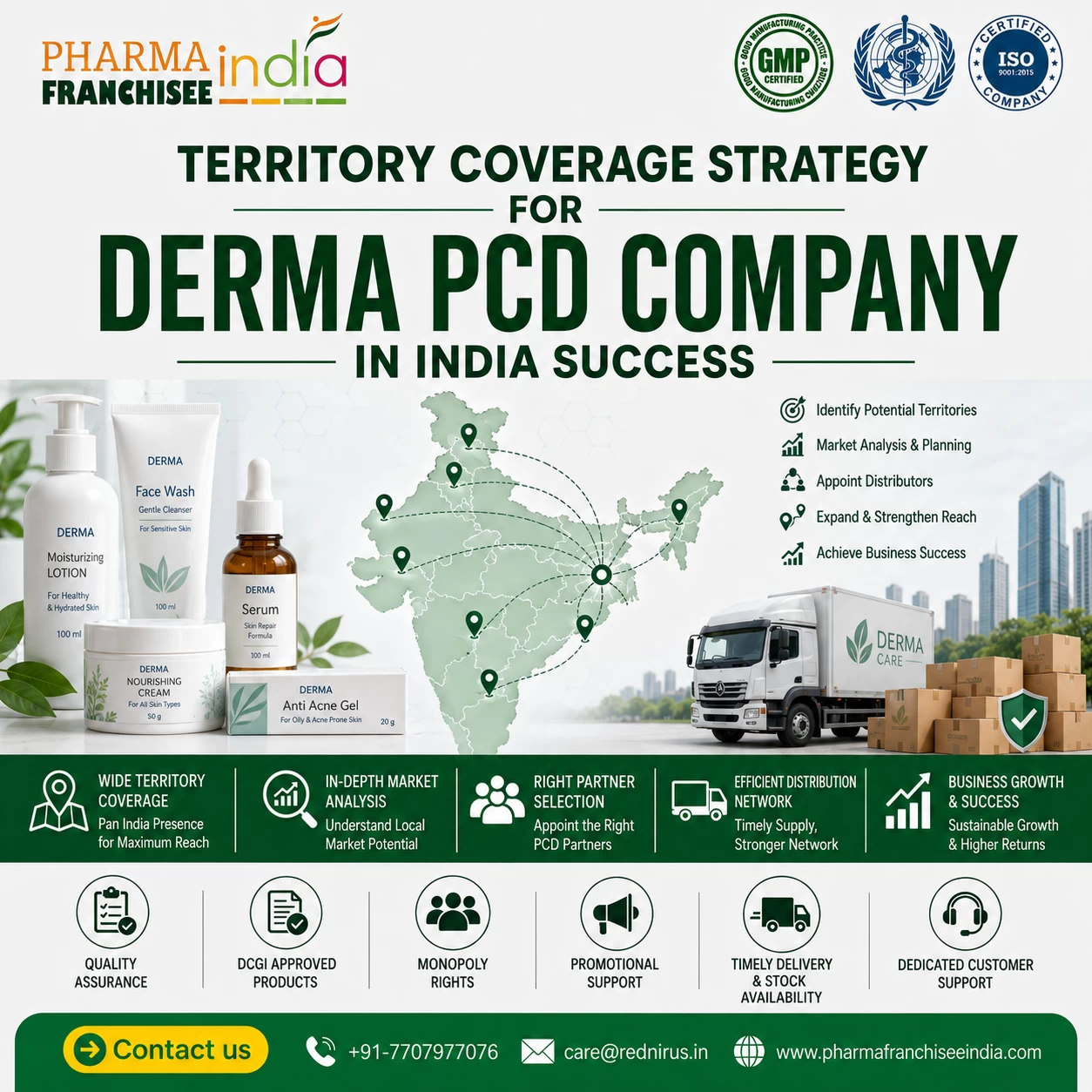
Territory coverage strategy determines derma PCD company in India success more than product quality, pricing, or manufacturer reputation combined. Excellent products poorly covered generate mediocre results. Average products systematically covered generate consistent revenue.
Most derma PCD franchise operators understand this intellectually but execute coverage haphazardly. They visit accessible doctors regularly, neglect distant prescribers, cover familiar areas repeatedly while leaving significant territory untouched. Comfortable patterns replace systematic coverage. Revenue plateaus reflect coverage gaps rather than market limitations.
Derma PCD company businesses built on systematic territory coverage consistently outperform those relying on relationship-based selective coverage regardless of portfolio quality or manufacturer support. Systematic coverage isn't complicated. But it requires deliberate planning most distributors never invest time creating.
We're walking through complete territory coverage framework specifically designed for derma PCD pharma franchise operators building sustainable dermatology distribution businesses.
Understanding Derma Territory Differently
Dermatology territory coverage differs fundamentally from general pharmaceutical distribution coverage approaches.
The Prescriber Concentration Reality
General pharmaceutical distribution requires covering hundreds of general practitioners spread across large geographic areas. Derma company franchise operators work with dramatically different prescriber landscapes.
Dermatologists are concentrated, not dispersed. A medium-sized city might have 15-25 active dermatologists practicing from specific clinic locations. These concentrated prescribers generate disproportionate prescription volumes compared to far larger general practitioner populations.
Beyond Dermatologists
Successful pharma franchise territory coverage in dermatology extends beyond dermatologist targeting.
General practitioners: Many GPs confidently prescribe standard dermatology products—antifungals, basic acne treatments, common skin infections. This GP population is larger, less targeted by specialist derma distributors, and often surprisingly responsive to quality products with professional representation.
Pediatricians: Childhood skin conditions—eczema, fungal infections, diaper rash, molluscum—represent significant derma product prescribing from pediatric practices. Most derma distributors completely ignore pediatrician targeting.
Aesthetic clinics: Medical aesthetic practitioners use significant quantities of cosmeceutical products, professional treatments, and prescription skin care. This channel requires different product emphasis but offers premium margin opportunities.
Cosmetologists and trichologists: Hair and skin specialists prescribing or recommending specific products represent additional coverage opportunity beyond traditional medical prescribers.
Complete territory coverage maps and systematically covers all relevant prescriber types rather than focusing exclusively on dermatologists.
Territory Mapping: Before Covering Anything
Systematic coverage starts with complete territory mapping before visiting anyone.
Building Complete Prescriber Database
Create comprehensive database of every relevant prescriber in your territory. Not just names you know. Every practitioner.
Sources for building complete database:
Indian Medical Association directories: Local IMA chapters maintain member directories. Request current membership lists covering your territory.
Medical Council registration records: State Medical Council registration databases list registered practitioners with qualifications and addresses.
Hospital staff directories: Hospitals and clinics often publish staff directories. Comprehensive canvassing of local hospitals reveals dermatologists and relevant specialists you might otherwise miss.
Pharmacy intelligence: Retail pharmacists know which doctors are prescribing which derma products. Conversations with 8-10 pharmacists in your territory quickly reveal active prescribers you haven't identified through other sources.
Peer referrals: Each dermatologist you visit knows their colleagues in the area. Simple question—"Are there other dermatologists I should be meeting in this area?"—reveals prescribers not appearing in formal directories.
Your database should include name, qualification, clinic address, clinic timings, clinic days, estimated patient volume, and current product preferences for each prescriber.
Geographic Territory Clustering
Organize territory into logical geographic clusters enabling efficient coverage without excessive travel.
Most derma PCD company territories divide naturally into 4-6 coverage zones based on geography, road connectivity, and prescriber concentration. Design clusters where you can visit all prescribers within each cluster during single coverage day without excessive backtracking.
Prescriber Prioritization System
Not every prescriber deserves equal coverage frequency. Build prioritization framework reflecting actual prescription potential.
Tier 1 Prescribers: High-volume dermatologists with large practices, active prescribing across multiple product categories, and proven openness to new supplier relationships. These prescribers receive highest visit frequency—ideally fortnightly contact during relationship building phase.
Tier 2 Prescribers: Medium-volume dermatologists and high-prescribing GPs. Important contributors to territory revenue but not top-priority relationships. Monthly visit frequency appropriate once initial relationship is established.
Tier 3 Prescribers: Lower-volume prescribers, peripheral specialists occasionally prescribing relevant products, new practitioners building practices. Quarterly coverage maintaining visibility without disproportionate time investment.
This prioritization ensures your best coverage time goes to highest-impact relationships rather than distributing effort equally across all prescribers regardless of potential.
The 90-Day Launch Strategy
New derma PCD pharma franchise territory requires structured launch approach rather than immediate ongoing coverage routines.
Month One: Intelligence Gathering
First month focuses on understanding territory deeply before making significant product or positioning commitments.
Visit every Tier 1 and Tier 2 prescriber once. These aren't selling visits. They're listening visits.
Questions revealing territory intelligence:
"What skin conditions are you seeing most frequently in your practice currently?"
"Which products are you finding most effective for acne/fungal/eczema management?"
"What gaps do you see in currently available derma product options?"
"Which manufacturers are currently supplying you and what's your experience been?"
These conversations reveal competitive landscape, unmet needs, and prescriber preferences more accurately than any market research report. This intelligence shapes your product positioning and coverage approach for months.
Month Two: Targeted Introduction
Armed with territory intelligence, month two introduces specific products addressing identified prescriber needs and gaps.
Don't introduce complete portfolio simultaneously. Overwhelming prescribers with extensive product catalogs during initial selling visits creates confusion rather than prescription intent.
Introduce 2-3 products per prescriber based on their specific patient mix and expressed needs. Dermatologist seeing significant acne patients? Focus acne portfolio introduction. GP mentioning frequent fungal infection presentations? Lead with antifungal product range.
Targeted introductions based on individual prescriber profiles demonstrate you listened during intelligence-gathering visits and understand their specific practice.
Month Three: Follow-Up and Conversion
Month three focuses on following up with every prescriber approached in month two.
"Doctor, did you get a chance to try the products with any patients?" This simple question opens clinical feedback conversations revealing prescriber experience and enabling prescription conversion discussions.
Some prescribers will have tried products and have feedback. Others haven't yet. Both conversations advance relationships differently but meaningfully.
Ongoing Coverage Rhythm
After launch phase establishes initial relationships, sustainable coverage rhythm maintains and grows prescription revenue.
Weekly Coverage Planning
Plan weekly coverage systematically every Monday morning rather than deciding day-by-day based on convenience.
Weekly plan should specify:
-
Which geographic cluster receives coverage focus
-
Specific prescribers within cluster and visit purpose for each
-
Products being introduced or followed up
-
Samples and promotional materials required
-
Retailer visits integrated into prescriber coverage route
Written weekly plans create accountability. End-of-week review comparing planned versus actual coverage reveals patterns—consistently skipped prescribers, geographic areas receiving inadequate attention, product categories being under-promoted.
Coverage Frequency Maintenance
Pharma franchise company operators successful in dermatology maintain consistent coverage frequency rather than intensive periods followed by neglect.
Dermatologists forget distributors who disappear for months between visits. Prescriber relationships deteriorate faster than they build. A competitor maintaining fortnightly visits while you visit quarterly will erode your prescription base steadily regardless of product quality.
Minimum acceptable coverage frequency:
-
Tier 1 dermatologists: Every 2-3 weeks during active relationship building
-
Tier 2 prescribers: Monthly once relationship established
-
Tier 3 prescribers: Quarterly visibility maintenance
Retail Coverage Integration
PCD pharma franchise derma distribution requires retail pharmacy coverage alongside prescriber relationship building.
Prescriptions written but unavailable at convenient pharmacies convert to competitor products instead. Systematic retail coverage ensures product availability at pharmacies serving your target prescribers.
Detailing Skills Specific to Dermatology
Territory coverage frequency means nothing without effective detailing skills converting visits into prescriptions.
Clinical Knowledge Requirements
Dermatologists expect representatives understanding dermatological conditions, treatment mechanisms, and clinical evidence. Representatives arriving with only product catalog knowledge receive minimal time and zero prescriptions.
Minimum clinical knowledge for effective derma PCD company representation:
Acne pathophysiology and treatment rationale—why specific ingredients work, how combination treatments address different pathogenic factors, patient selection criteria for different formulation options.
Fungal infection classification and treatment—superficial versus deep fungal infections, appropriate product selection for different presentations, treatment duration rationale.
Eczema and psoriasis management principles—disease chronicity implications, maintenance versus flare treatment approaches, topical steroid use principles and concerns.
This knowledge enables clinical conversations rather than product monologues—the difference between being respected as resource versus tolerated as intrusion.
Visual Aid Usage
Effective derma company franchise representatives use visual aids enhancing rather than replacing clinical conversations.
Visual aids showing product mechanisms, clinical evidence, comparison data, and patient outcome photos create engagement unavailable through verbal description alone.
But visual aids driven mechanically—flipping through pages while reading text aloud—are worse than no visual aids. Use selectively. Show specific page relevant to current conversation point. Let visual aid support your clinical narrative rather than replace it.
Sample Distribution Strategy
Sampling strategy significantly affects prescription conversion rates.
Provide samples representing products you're actively detailing—not complete portfolio sampling every visit. Focused sampling creates trial intent. Broad sampling creates sample collection without trial commitment.
Follow up specifically on samples provided. "Doctor, I left samples of the combination acne gel last visit. Have you had opportunity trying with any patients?" This specific follow-up demonstrates you track your detailing commitments and take prescriber experience seriously.
Monitoring and Optimization
Coverage strategy without performance monitoring doesn't improve.
Key Metrics Tracking
Track specific metrics revealing coverage effectiveness:
Coverage rate: Percentage of database prescribers visited within defined period. Less than 80% coverage rate indicates significant prescriber gaps.
Prescription conversion rate: Percentage of detailed prescribers actually writing prescriptions. Low conversion despite high coverage reveals detailing quality issues rather than coverage gaps.
Revenue per prescriber: Average monthly revenue generated per active prescriber. Low revenue per prescriber might indicate limited product range usage per prescriber or inadequate follow-up converting initial trials into regular prescribing.
New prescriber addition rate: How many new prescribers added to active prescribing base monthly. Growing active prescriber base drives revenue growth. Flat prescriber base limits growth regardless of relationship quality with existing prescribers.
Quarterly Coverage Review
Review complete territory coverage quarterly. Analyze which prescribers have become active, which remain unconverted despite multiple visits, and which previously active prescribers show declining prescription volumes.
Unconverted prescribers after 4-6 visits need strategy adjustment—different product approach, different visit timing, different initial product focus. More of the same approach that hasn't worked won't suddenly work.
Declining prescribers need urgent attention. Understand what changed. Competitor relationship? Product quality concern? Service failure? Each cause requires different response.
Derma PCD company in India success ultimately reflects coverage consistency compounded over time. Systematic coverage creating relationships. Relationships generating prescriptions. Prescriptions building recurring revenue. Recurring revenue funding coverage investment maintaining and growing relationships.
This cycle, maintained consistently through pharma franchise territory discipline, builds derma distribution businesses that compound in value year over year.
Read More: Product Range Best Gynae PCD Company Must Offer

Author : Surinder Thakur
Surinder Thakur has closely worked in the PCD franchise field for more than 20 years. With a background in pharmaceutical marketing, he understands both medicine and the business behind it. Through Pharmafranchiseeindia.com, he shares practical and honest guidance to assist pharma professionals make better decisions.