
How to Choose the Best Injection Manufacturing Company Partner
Browse 3,500+ WHO-GMP certified PCD pharma companies offering monopoly franchise rights across all 28 states. Compare pricing, products & territory — for free.
Our expert connects you with the best PCD company within 24 hours
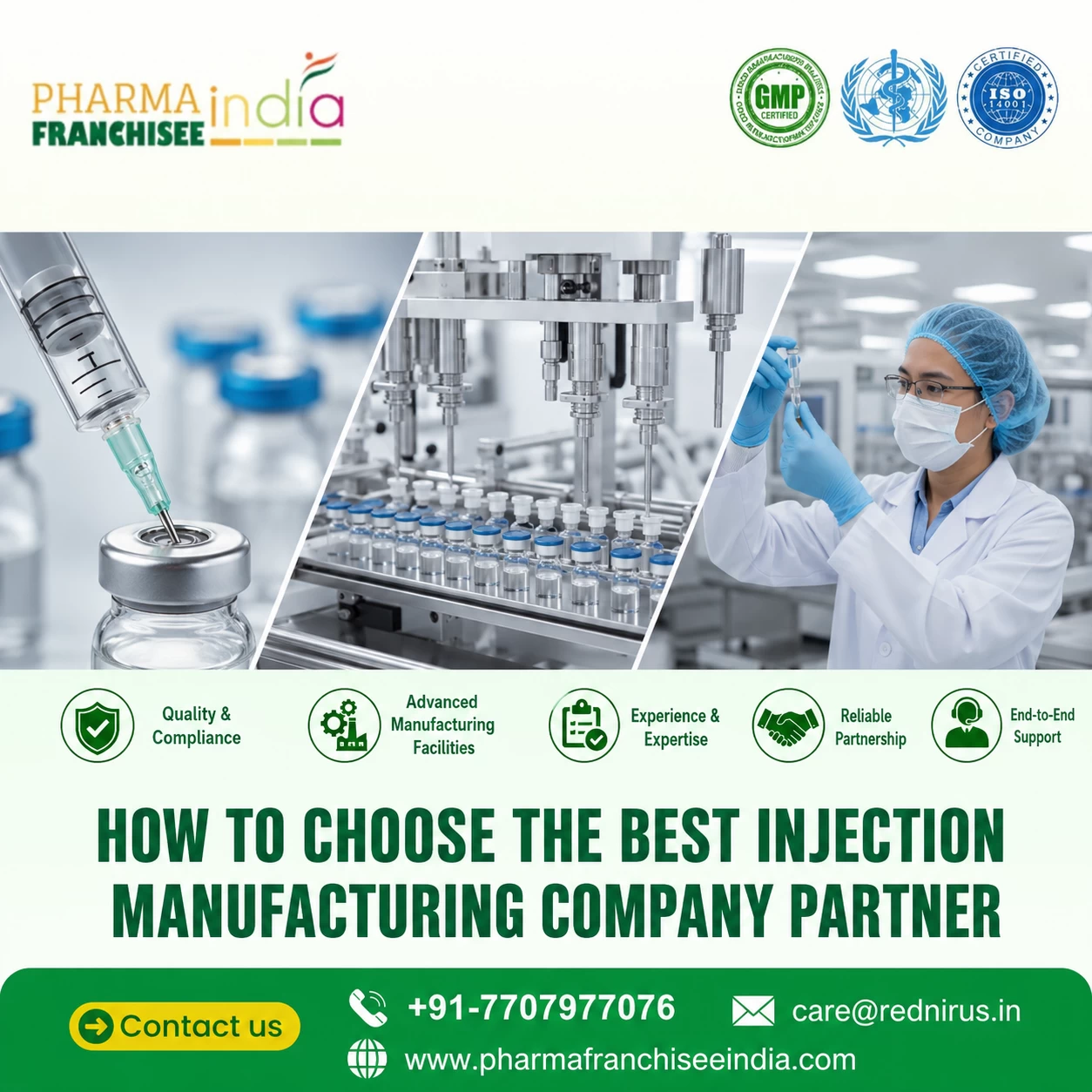
Selecting an injection manufacturing company partner represents one of the most critical decisions for entrepreneurs entering pharmaceutical distribution. Unlike oral medications where quality variations create manageable issues, injectable in pharmaceutical products demand absolute manufacturing excellence. Quality failures in injectable products can cause serious medical complications, legal liabilities, and permanent business reputation damage.
The pcd franchise for injectable range market offers numerous partnership options, yet quality standards vary dramatically between manufacturers. We will examine specific evaluation criteria distinguishing reliable injection manufacturers from problematic ones, enabling informed partnership decisions that protect both business interests and patient safety.
Understanding Injectable Manufacturing Complexity
Injection manufacturing requires substantially higher technical capabilities than oral pharmaceutical production, creating natural quality differentiation between manufacturers.
Sterility Requirements
Injectable products entering directly into bloodstream or body tissues must maintain absolute sterility. Microbial contamination causing infections creates severe medical consequences. Injection pcd company operations require specialized clean rooms, sterilization processes, and stringent contamination controls unavailable in standard pharmaceutical facilities.
Manufacturing environments must meet specific classification standards—typically Grade A and Grade B clean rooms for injectable production. These facilities cost significantly more to build and maintain than oral medication production areas.
Regulatory Stringency
Regulatory authorities apply heightened scrutiny to injectable pcd companies compared to oral medication manufacturers. Approval processes involve facility inspections verifying contamination controls, personnel training, equipment calibration, and quality systems specifically for sterile product manufacturing.
Manufacturing licenses specifically authorize injectable production. General pharmaceutical licenses don't automatically permit injectable manufacturing, requiring separate approvals and facility qualifications.
Primary Quality Indicators
Several concrete quality indicators help evaluate injection manufacturing company capabilities objectively.
WHO-GMP Certification Specificity
While many manufacturers claim WHO-GMP certification, verify the certification specifically covers sterile injectable production. Generic pharmaceutical WHO-GMP doesn't confirm injectable manufacturing capability.
Request certificate copies and verify validity directly with issuing authorities. Expired certifications or those not covering injectable products indicate manufacturers lacking proper qualifications despite claims.
Schedule M Compliance
Indian regulations under Schedule M specify Good Manufacturing Practices including requirements specific to sterile products. Injection manufacturers must demonstrate Schedule M compliance through documented quality systems, validation studies, and facility qualifications.
Ask potential partners for Schedule M compliance documentation specific to their injectable production facilities. Vague assurances without documentation suggest inadequate compliance.
Facility Inspection Reports
Request recent regulatory inspection reports from drug control authorities. While manufacturers may hesitate sharing complete reports, serious operations provide inspection summaries showing no major observations or demonstrating corrective actions for any findings.
Manufacturers refusing to share any inspection information likely have compliance issues they're hiding.
Manufacturing Capability Assessment
Beyond basic certifications, assess actual manufacturing capabilities determining product quality consistency.
Production Capacity and Scale
Injectable range franchise success requires reliable supply availability. Manufacturers operating near capacity limits frequently face stock-outs during demand peaks or when quality issues force batch rejections.
Evaluate whether manufacturer capacity adequately serves existing distribution network with room for growth. Overcommitted manufacturers create supply reliability problems regardless of quality capabilities.
Product Range Depth
Manufacturers offering comprehensive injectable portfolios demonstrate sustained commitment to this segment. Those with limited injectable ranges alongside broader oral medication focus may lack specialized expertise necessary for consistent injectable quality.
Depth in therapeutic categories relevant to your distribution plans indicates manufacturer investment in those segments.
Technology and Equipment
Modern, well-maintained equipment indicates quality commitment and financial stability. During facility visits, observe:
-
Equipment condition and maintenance
-
Automation level in filling and packaging
-
Analytical laboratory capabilities
-
Environmental monitoring systems
-
Documentation and record-keeping systems
Outdated equipment or deferred maintenance suggests manufacturers cutting corners on quality investments.
Quality Control Verification
Robust quality control systems separate reliable injection manufacturing company operations from marginal ones.
Testing Protocols
Inquire about specific testing performed on injectable products:
-
Sterility testing methodology and frequency
-
Endotoxin testing (bacterial toxins causing reactions)
-
Particulate matter testing
-
Potency and purity verification
-
Stability testing programs
Manufacturers should eagerly explain testing protocols. Vague responses or reluctance discussing testing suggest inadequate quality controls.
Batch Release Procedures
Understand batch release authorization processes. Qualified personnel should review all quality data before approving batches for distribution. Rapid batch releases without adequate review time indicate shortcuts compromising product safety.
Quality Complaint Handling
Ask about quality complaint management systems. Reliable manufacturers:
-
Maintain formal complaint recording
-
Investigate all complaints systematically
-
Track complaint trends identifying systemic issues
-
Implement corrective actions preventing recurrence
-
Communicate investigation outcomes transparently
Defensive responses or blame-shifting when discussing complaints reveals manufacturers avoiding quality accountability.
Raw Material Sourcing Standards
Injectable product quality starts with raw material quality, making supplier selection and verification critical.
API Source Verification
Injection manufacturers must source Active Pharmaceutical Ingredients from qualified, audited suppliers. Inquire about API sourcing practices:
-
Supplier qualification procedures
-
Certificate of Analysis verification
-
Incoming material testing beyond trusting supplier certificates
-
Supplier audit frequency
Manufacturers relying purely on supplier documentation without independent verification risk quality issues from substandard raw materials.
Excipient Quality
Injectable products use pharmaceutical-grade excipients meeting sterility and purity standards exceeding oral medication requirements. Water quality particularly matters—Water for Injection (WFI) standards differ significantly from purified water used in oral formulations.
Verify manufacturers use appropriate grade excipients and maintain documentation proving material quality specifications.
Cold Chain and Storage Capabilities
Many injectable in pharmaceutical products require temperature-controlled storage and distribution.
Temperature Monitoring Systems
Reliable manufacturers maintain validated cold storage with continuous temperature monitoring, automated alerts for deviations, and backup power preventing temperature failures.
During facility visits, verify temperature monitoring equipment, alarm systems, and documented protocols for temperature excursion handling.
Distribution Temperature Control
Beyond manufacturing facility storage, verify support for distribution cold chain requirements. Do they provide:
-
Insulated packaging for temperature-sensitive products
-
Temperature monitoring devices for shipments
-
Guidance on cold chain maintenance
-
Support resolving temperature control issues
Injectable range franchise operations need manufacturers understanding and supporting complete cold chain from production through end distribution.
Regulatory Track Record
Past regulatory performance predicts future reliability better than current compliance claims.
Inspection History
Review manufacturer inspection history over 3-5 years. Patterns matter more than isolated incidents. Consistent clean inspections indicate sustained quality commitment. Repeated similar observations suggest systemic issues the manufacturer hasn't addressed.
Product Recalls
Check whether manufacturer experienced product recalls, particularly for injectable products. Occasional recalls happen even to quality manufacturers. Frequency and causes reveal whether quality systems catch issues before distribution or fail allowing defective products reaching markets.
License Status
Verify manufacturing licenses remain current and active. Suspended or revoked licenses obviously eliminate manufacturers from consideration, yet some continue operating hoping to restore licenses.
Check license status directly with drug control authorities rather than trusting manufacturer-provided documents.
Business Stability Indicators
Injection pcd company partnerships require stable manufacturers who'll remain operational long-term.
Financial Health
While obtaining detailed financial information proves difficult, observe indicators suggesting financial stability:
-
Regular infrastructure investments and facility upgrades
-
Employee retention and compensation
-
Payment terms offered to distributors
-
Supplier relationship quality
Financially struggling manufacturers cut quality corners, delay payments to suppliers, and risk sudden closure disrupting your distribution.
Market Reputation
Research manufacturer reputation among existing distributors, retailers, and healthcare providers. Consistent negative feedback indicates problematic partnerships despite impressive marketing materials.
Industry forums, distributor networks, and pharmacy associations provide unfiltered insights into manufacturer reliability.
Support Systems Evaluation
Partnership quality extends beyond product supply to operational support.
Technical Support Availability
Injection manufacturing products require technical knowledge for proper handling, storage, and customer education. Manufacturers should provide:
-
Product training covering handling and storage
-
Technical literature for customer education
-
Responsive support for technical queries
-
Field support in key markets
Manufacturers treating distributors as mere customers rather than partners provide minimal support beyond taking orders.
Documentation and Regulatory Support
Injectable distribution requires substantial documentation—quality certificates, stability data, regulatory approvals, temperature monitoring records. Reliable manufacturers provide required documentation promptly without treating requests as burdens.
Comparison with Alternatives
When evaluating injectable pcd companies options, compare against alternative business models understanding trade-offs.
Traditional pharma franchise or pcd pharma franchise models in oral medications offer simpler operations but lower margins and intense competition. Pharma pcd companies for general pharmaceuticals provide easier entry but less differentiation. Similar to choosing among pharma distributors or pharma franchise company options, injectable partnerships require balancing complexity against profitability potential.
Injectable products demand higher manufacturer quality standards than oral medications, making selection more critical. However, quality partnerships provide better margins, less competition, and stronger market positioning justifying additional selection diligence.
Final Selection Criteria
After evaluating multiple injection manufacturers, synthesize findings across all criteria:
Quality Systems: Do certifications, testing protocols, and facility standards demonstrate commitment to sterile product quality?
Manufacturing Capability: Can they reliably supply required volumes with consistent quality?
Regulatory Compliance: Does inspection history show sustained compliance?
Business Stability: Will they remain viable partners long-term?
Support Quality: Do they invest in distributor success beyond product supply?
We recommend creating weighted scorecards assessing candidates across these dimensions rather than relying on intuition or single factors. Injectable partnerships carry higher stakes than oral medication distribution, warranting systematic evaluation approaches ensuring selection decisions rest on comprehensive analysis rather than marketing impressions or limited criteria.
The right injection manufacturing company partner provides foundation for successful injectable range franchise operations while wrong partners create ongoing quality, supply, and reputation challenges potentially destroying businesses. Investment in thorough partner evaluation pays dividends through avoided problems and sustained business success.
Read More: Why Protein Drink Manufacturers in India Are the Next Big Opportunity for Pharma Distributors

Author : Surinder Thakur
Surinder Thakur has closely worked in the PCD franchise field for more than 20 years. With a background in pharmaceutical marketing, he understands both medicine and the business behind it. Through Pharmafranchiseeindia.com, he shares practical and honest guidance to assist pharma professionals make better decisions.