
How to Find Top Third Party Manufacturing Pharma Company in India
Browse 3,500+ WHO-GMP certified PCD pharma companies offering monopoly franchise rights across all 28 states. Compare pricing, products & territory — for free.
Our expert connects you with the best PCD company within 24 hours
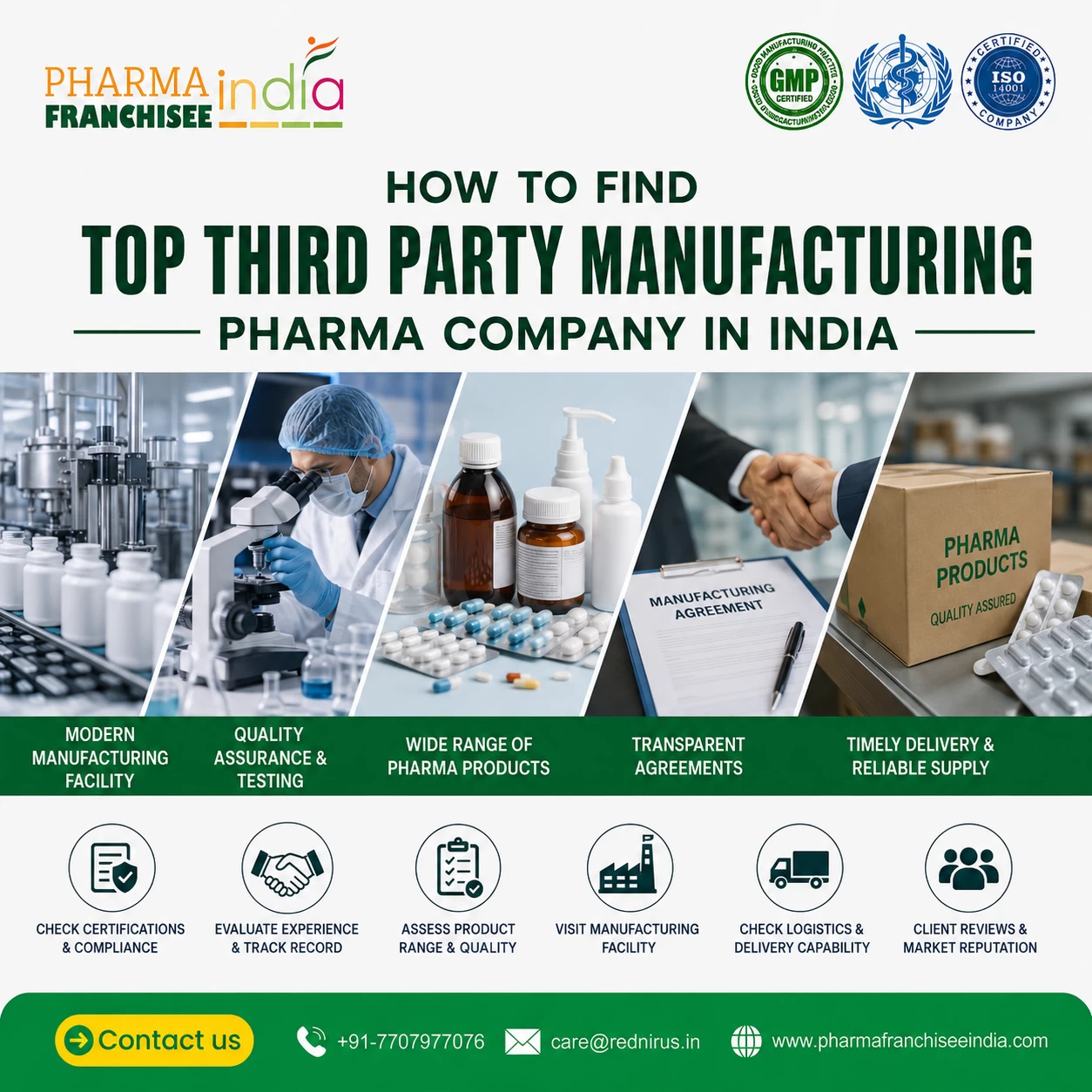
Building a pharmaceutical brand requires finding the right third party manufacturing pharma company partner. Everything downstream—product quality, regulatory compliance, supply reliability, brand reputation—depends on this single decision.
Most entrepreneurs approach manufacturer search backwards. They collect lists, compare pricing, choose cheapest option meeting basic criteria. Six months later, quality complaints arrive. Batch failures disrupt supply. Regulatory issues surface. Brand reputation suffers before it's properly established.
Pharma third party manufacturers vary dramatically in capabilities, quality systems, and reliability. Price differences between manufacturers often reflect genuine quality differences rather than arbitrary margin variations. Understanding how to identify genuinely capable partners versus those appearing capable during sales presentations separates successful brand launches from expensive failures.
We're walking through systematic approach to finding, evaluating, and selecting third party manufacturing pharma companies that will actually support your brand's success long-term.
Starting Your Search Correctly
Where you search determines which manufacturers you find.
Industry Sources Worth Using
Trade exhibitions and pharmaceutical conferences connect you with manufacturers actively seeking partnerships. Events like CPhI India, Pharma India Expo, and regional pharmaceutical trade shows bring legitimate manufacturers together in one place. Face-to-face interactions reveal more about company culture and capabilities than any website.
Industry associations maintain manufacturer directories with basic verification. Indian Drug Manufacturers Association, Bulk Drug Manufacturers Association, and state-level pharmaceutical associations provide starting points filtering out completely illegitimate operators.
Existing distributor networks provide honest referrals. PCD pharma company distributors already working with manufacturers have firsthand experience. Their recommendations carry weight because they've lived the operational reality.
Sources to Approach Cautiously
Online directories and aggregator websites list manufacturers without quality verification. Any company paying listing fees appears alongside genuinely capable manufacturers.
"Top 10 third party manufacturers" articles are often sponsored content or SEO-driven lists with no actual quality assessment behind rankings.
Social media groups generate manufacturer recommendations of wildly varying reliability. Treat these as starting points for further investigation, never as validated endorsements.
Primary Verification Checklist
Before investing time visiting facilities or discussing products, verify basic credentials.
Manufacturing License Verification
Pharmaceutical third party manufacturing requires specific manufacturing licenses. Don't just request copies—verify directly.
Check manufacturer's drug manufacturing license through:
-
State Drug Control Authority records
-
CDSCO online database for certain license categories
-
Direct inquiry to licensing authority confirming license currency
Verify license specifically covers product categories you need. General manufacturing license doesn't automatically authorize all dosage forms. Tablet manufacturer license doesn't cover injectable production. Mismatch between license scope and claimed capabilities is immediate red flag.
WHO-GMP and Schedule M Compliance
Third party manufacturing pharma operations must comply with Schedule M requirements under Indian pharmaceutical regulations. WHO-GMP certification indicates facility meets international good manufacturing practice standards.
Request GMP certificates and verify:
-
Certificate validity dates (expired certificates are worthless)
-
Certifying authority legitimacy
-
Specific dosage forms covered
-
Any major observations from recent inspections
Pharma third party manufacturing company operators with clean, current GMP certifications provide baseline quality assurance. Those with lapsed certifications or reluctant sharing inspection documentation raise serious concerns.
Company Registration and Legal Standing
Verify the company is legitimately registered:
-
Ministry of Corporate Affairs database for company registration
-
GST registration confirming active business status
-
Any legal disputes or regulatory actions through court records search
Legitimate pharmaceutical third party manufacturing companies have clean, verifiable legal histories. Operators with disputed regulatory histories or pending legal actions create partnership risks worth avoiding.
Facility Evaluation
Documentation verification is necessary but insufficient. Physical facility inspection reveals operational reality.
What to Observe During Visits
Scheduled facility visits show you their best presentation. Observe beyond the showcased areas.
Manufacturing environment cleanliness: Pharmaceutical manufacturing requires rigorous contamination controls. Dust, disorganization, and inadequate environmental controls visible during formal visits indicate worse conditions during actual production.
Equipment condition and maintenance: Modern, well-maintained equipment indicates genuine investment in manufacturing quality. Aging, poorly maintained equipment suggests cost-cutting compromising product quality.
Personnel practices: Are workers following gowning protocols? Using proper protective equipment? Following documented procedures or improvising? Worker behavior reveals actual quality culture beyond written procedures.
Documentation systems: Are batch records, logbooks, and quality documents organized and current? Or are records being hastily assembled for your visit? Experienced evaluators spot retroactively compiled documentation quickly.
Storage conditions: Raw materials and finished products stored correctly? Temperature monitoring active? FIFO practices evident in warehouse organization?
The Unscheduled Visit Option
Genuinely confident manufacturers welcome visits with minimal notice. Requesting facility visit within 24-48 hours notice reveals operational reality rather than presentation-ready facility.
Manufacturers insisting on extensive preparation time before visits—claiming scheduling complexity—might be preparing facilities specifically for your evaluation rather than showing actual operating conditions.
Quality System Assessment
Third party manufacturing pharma companies vary dramatically in quality system sophistication.
Testing Laboratory Capabilities
In-house analytical laboratory capable of testing finished products and raw materials is essential. Evaluate:
Equipment availability: HPLC, dissolution apparatus, disintegration testers, microbiology laboratory—equipment matching their claimed testing protocols should be present and operational.
Qualified personnel: Analytical chemists with appropriate qualifications operating laboratory equipment. Equipment present but operated by unqualified personnel provides false quality assurance.
Third-party testing practices: Quality manufacturers periodically send samples to independent accredited laboratories confirming internal test results. Ask which external laboratories they use and how frequently.
Batch Record Systems
Review actual batch records from recent production. Legitimate records show:
-
Complete parameter documentation throughout production
-
Actual measured values rather than copied standard values
-
Deviation records when parameters vary from specification
-
Quality release authorization with qualified person signature
Batch records showing identical values across multiple batches—particularly for parameters that naturally vary—suggest records are being fabricated rather than genuinely documented.
Stability Testing Programs
Pharma third party manufacturers should conduct real-time and accelerated stability studies supporting shelf life claims. Request stability data for products similar to what you're planning.
Manufacturers claiming 24-36 month shelf life without stability data backing claims are making potentially false assertions. Products degrading faster than labeled deliver ineffective treatment to patients while creating regulatory liability for your brand.
Capacity and Supply Reliability Assessment
Quality is essential but useless if manufacturer can't reliably supply your requirements.
Current Capacity Utilization
Ask directly about current production capacity utilization. Manufacturers operating above 85-90% capacity routinely face scheduling conflicts affecting your orders during peak periods.
Pharma franchise company brand owners discovering their manufacturer can't fulfill orders during market expansion phases lose momentum that's extremely difficult rebuilding. Capacity assessment before commitment prevents this painful situation.
Supply Track Record
Talk to existing clients about supply reliability. Specific questions revealing reality:
-
How frequently do orders arrive on committed dates?
-
How much advance notice do you receive when delays occur?
-
How are supply shortfalls handled?
-
What's the typical lead time between order and delivery?
Manufacturer-provided references will share positive experiences. Find independent clients through industry networks for honest assessments.
Raw Material Sourcing
Supply reliability depends partly on raw material sourcing stability. Ask about:
-
Primary API suppliers and backup options
-
Vendor qualification processes
-
Historical raw material shortage management
-
Inventory buffers maintained for critical materials
Third party manufacturing pharma companies with diversified raw material sourcing handle supply disruptions better than those depending on single suppliers for critical inputs.
Commercial Terms Evaluation
Quality and capability assessment must combine with commercial term analysis.
Minimum Order Quantities
MOQ requirements significantly affect capital requirements and inventory risk. Compare across multiple pharmaceutical third party manufacturing partners:
Higher MOQs require larger capital commitments per product. Lower MOQs allow testing market with manageable inventory investment before scaling.
Negotiate MOQs particularly for initial orders. Manufacturers wanting long-term partnerships often accommodate lower initial MOQs to establish relationships, with higher minimums applying after initial trial periods.
Pricing Transparency
Detailed pricing breakdowns reveal genuine cost structures:
-
API and raw material costs
-
Manufacturing charges
-
Packaging costs
-
Quality testing charges
-
Documentation fees
Manufacturers providing transparent cost breakdowns demonstrate confidence in their pricing. Those offering opaque "all-in" pricing without breakdown make comparative evaluation difficult and hide potential markup areas.
Payment Terms
Standard payment terms across third party manufacturing pharma industry vary from 100% advance to 30-day credit for established clients. Advance payment requirement for new clients is normal. Evaluate:
-
Advance percentage required for new clients
-
Credit terms available after relationship establishment
-
Payment milestones for large orders
-
Refund terms if quality failures occur
Red Flags Requiring Immediate Disqualification
Certain observations should eliminate manufacturers from consideration regardless of other factors.
Reluctance providing license documentation or insisting only copies rather than direct verification access. Facility visits restricted to specific areas only without reasonable explanation. Batch records unavailable or showing obviously fabricated entries. Unwillingness discussing quality failures or how they're handled. Pricing significantly below market rates without credible explanation. Staff unable answering basic technical questions about manufacturing processes.
PCD pharma franchise and pharma franchise brand owners sometimes ignore red flags during enthusiasm of new brand launches. These shortcuts create quality, regulatory, and business problems appearing months or years later at far greater cost than the time invested in thorough initial evaluation.
Building the Final Decision
After evaluating multiple third party manufacturing pharma companies, synthesize findings systematically.
Create weighted scoring across key criteria:
-
License and regulatory compliance
-
Facility and equipment quality
-
Quality system sophistication
-
Supply reliability track record
-
Capacity availability
-
Commercial terms competitiveness
-
Communication and responsiveness
Weight criteria according to your specific priorities. Brand owners in quality-sensitive therapeutic categories weight quality criteria heavily. Those requiring flexible MOQs for market testing weight commercial terms accordingly.
The right pharmaceutical third party manufacturing partner isn't necessarily the highest-scoring on any single criterion. It's the partner whose overall capabilities best match your specific brand requirements, market positioning, and business model.
Invest in thorough evaluation upfront. Switching manufacturers after brand launch—reformulation approvals, new product registrations, packaging changes—costs far more in time, money, and market disruption than finding the right partner initially.

Author : Surinder Thakur
Surinder Thakur has closely worked in the PCD franchise field for more than 20 years. With a background in pharmaceutical marketing, he understands both medicine and the business behind it. Through Pharmafranchiseeindia.com, he shares practical and honest guidance to assist pharma professionals make better decisions.